Enzymolytic Soybean Meal Study Maps Gut Effects in Broilers
Poultry Science will publish in December 2026 an eight-author study on enzymolytic soybean meal in broilers, tracking growth, gut morphology, cecal microbiota and short-chain fatty acids.
Updated
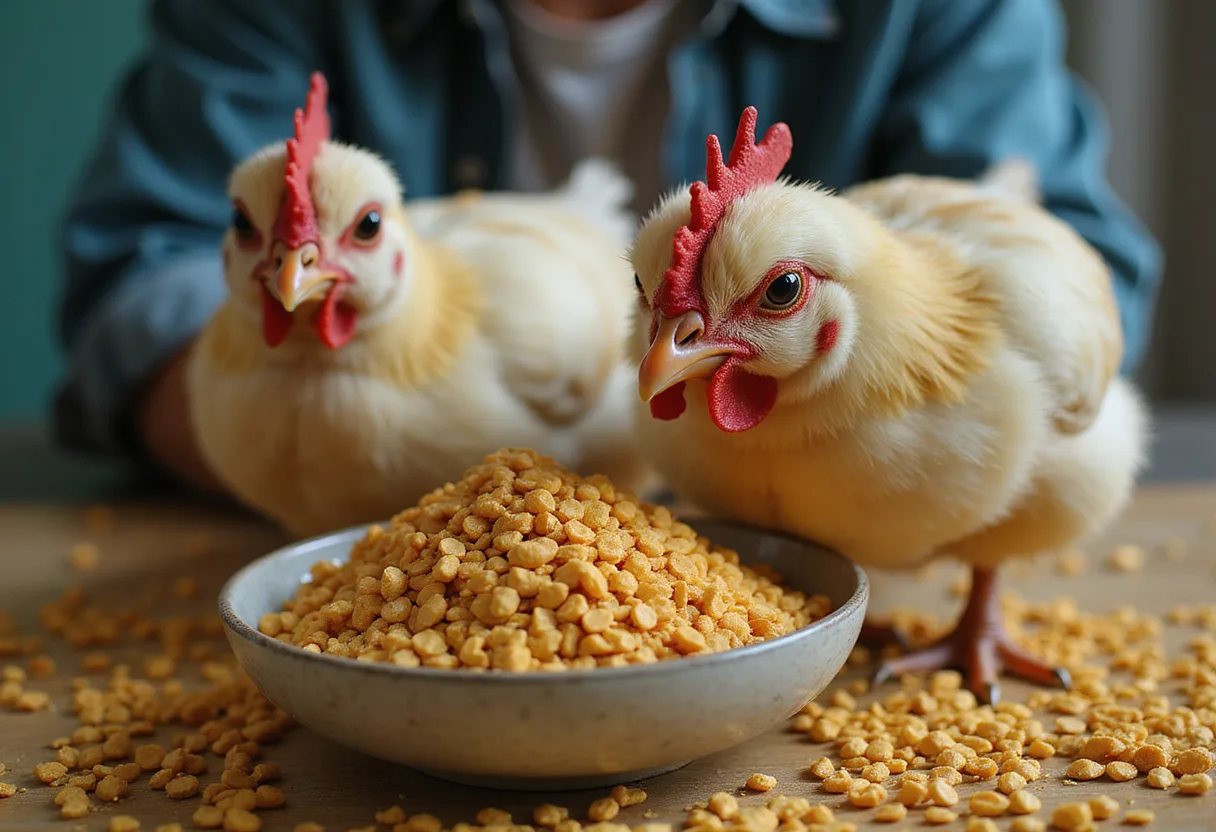
Photo: Jai79 / pixabay
Poultry Science will publish in December 2026 a study that asks a direct question for every poultry producer who feeds soybean meal: what happens in the broiler gut when that meal has already been broken down by enzymes before it reaches the feed trough?
The paper, scheduled for Volume 105, Issue 12 of the journal, carries the title "Effects of enzymolytic soybean meal on growth performance, intestinal morphology, cecal microbiota, and short-chain fatty acids in broilers." Its author list spans eight researchers: Dongfeng Fan, Fengyang Wu, Baojiang Chen, Yajuan Liu, Shuaijuan Han, Fengxia Wang, Zhonghua Wei and Saijuan Chen.
The study design itself signals where the field is moving. Rather than measuring weight gain alone, the authors tracked four layers of the bird's biology at once: how fast the broilers grew, how the intestinal wall was shaped, which microbes populated the cecum, and which short-chain fatty acids those microbes produced.
Why enzymolysis matters at the feed mill
Soybean meal remains the dominant protein source in broiler diets worldwide. Its limitation is well known to nutritionists: certain compounds in the meal resist the bird's own digestion. Enzymolytic treatment — using enzymes to pre-digest the meal before formulation — aims to convert those resistant fractions into forms the bird can absorb.
If pre-digestion works as intended, three things should follow. Growth performance should improve or at least hold steady. The intestinal villi, the absorptive surface of the gut, should show favorable structural changes. And the cecal microbial community should shift toward populations that ferment fiber into short-chain fatty acids — the acids that fuel the gut wall itself.
What the four endpoints tell practitioners
Each endpoint in the study answers a different question at the barn level:
- Growth performance — the commercial bottom line: feed conversion and daily gain on enzymolytic versus standard meal.
- Intestinal morphology — the structural readout: villus height and crypt depth indicate whether the gut wall has more absorptive capacity.
- Cecal microbiota — the ecological readout: which bacterial populations expand or contract under the modified diet.
- Short-chain fatty acids — the metabolic readout: whether the shifted microbiome actually produces more of the acids that serve as energy for intestinal cells.
The pairing of the last two endpoints carries particular weight. A microbiome shift means little if fermentation output does not change with it. By measuring both, the authors connect community composition to function.
Where this sits in the feed-additive conversation
For poultry veterinarians and nutritionists, enzymolytic soybean meal sits in the same practical space as other feed interventions aimed at gut health: alternatives that gained urgency as producers reduced reliance on antibiotic growth promoters. An ingredient that reliably reshapes the cecal microbiome and raises short-chain fatty acid production would give practitioners a dietary lever for gut integrity, not just a protein swap.
The regulatory frame is simpler than for drugs or vaccines: enzymolytic soybean meal is a processed feed ingredient, not a product requiring FDA CVM new-animal-drug approval or USDA licensing. That distinction matters for adoption speed. Feed-ingredient changes move at mill-contract pace, not agency-review pace.
What to watch for in the full text
The metadata released ahead of the December 2026 issue does not yet state bird numbers, trial duration, dietary inclusion rates or the specific enzyme used in treatment. Those details will determine how far the findings travel — a small pen trial with one enzyme product supports a narrower claim than a floor-replicated study across multiple inclusion levels.
Readers evaluating the paper for practice decisions should look first for sample size and experimental design, then for whether the growth data and the microbiota data point the same direction. A treatment that shifts the microbiome without moving growth performance tells a different story than one that moves both.
The full paper lands in Poultry Science, Volume 105, Issue 12, in December 2026, and its appearance will give nutritionists a new dataset on whether pre-digested protein can deliver measurable change from the feed trough to the cecum.
Source: Poultry Science (Elsevier)
Nathan Brooks
Show full bio
Senior reporter covering companies, deals and strategy in Small- and large-animal clinical practice at The Vet Scope.
Related articles
Poultry Science study maps diet levers for 22-35 day broiler performance
Poultry Science Study Tests Lupin and Faba Bean in Broiler Starter Diets
Low-Protein Broiler Diets Linked to Better Gut Health
Housefly larvae meal, frass tested for late-phase laying hens
Poultry Science review maps biotech routes for palm kernel meal feed