Cold-Stored Platelets Cut Bleeding in Thrombocytopenic Dogs, WSU Study Finds
WSU retrospective study of 24 dogs: 4°C-stored platelets kept up to 21 days improved bleeding in 70% of transfusions, extending shelf life fourfold over room-temperature storage.
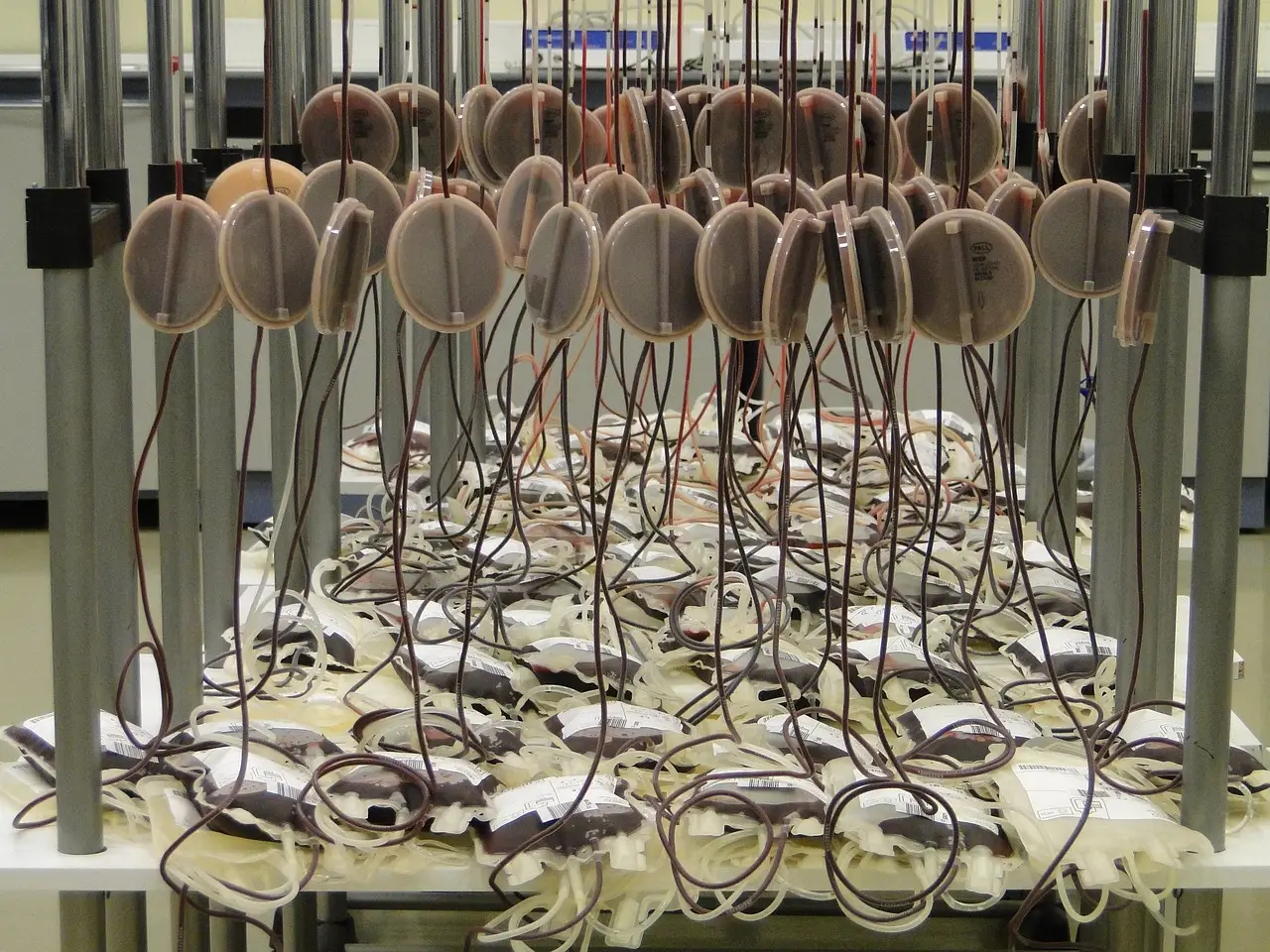
Photo: sabinurce / pixabay
Refrigerated canine platelet concentrates stored for up to 21 days reduced bleeding severity in thrombocytopenic dogs, according to a retrospective study from the Washington State University (WSU) College of Veterinary Medicine published in the Journal of Veterinary Internal Medicine. WSU calls the findings the first clinical evidence that cold-stored platelets can work effectively in dogs — and the number that matters at the exam table is 21 days of shelf life replacing roughly 5.
Conventional canine platelet concentrate must sit at room temperature under constant agitation, a handling burden that limits storage to approximately 5 days and raises the risk of bacterial proliferation. That short window keeps platelet transfusion underused in veterinary medicine, even though it can save dogs with severe thrombocytopenia and hemorrhage.
"It is hard to overstate how important the ability to transfuse platelets is," said Jillian Haines, DVM, MS, DACVIM (SAIM), director of the WSU Veterinary Teaching Hospital's blood bank, who led the research. "Many of us have seen patients die from bleeding complications because there was simply nothing we could offer them. We went from having essentially nothing available to now having a really viable product that we can use."
How the study was built
Researchers reviewed medical records of 24 thrombocytopenic dogs that received 27 cold-stored platelet transfusions at the WSU Veterinary Teaching Hospital between March 2022 and October 2024. The team prepared platelet concentrates from 450-mL whole blood donations by double centrifugation and stored them at 4 °C without agitation for up to 21 days. Mean storage time before transfusion was 12.4 days.
Immune-mediated thrombocytopenia was the most common primary disease (9 dogs), followed by neoplasia (7). Clinicians gave the transfusions for three purposes:
- to support minimally invasive procedures (12 transfusions),
- to treat spontaneous bleeding (9),
- to support surgery (6).
The researchers scored hemorrhage severity before transfusion and at 1 and 4 hours afterward using a modified Daily Canine Bleeding Assessment Tool (DOGiBAT) that added a category for cavitary bleeding.
What changed at four hours?
Clinical improvement occurred within 4 hours in 19 of 27 transfusion events (70%), and partial improvement occurred in 7 (26%). Mean modified DOGiBAT scores fell from 3.15 at baseline to 2.21 at 4 hours (P = .002). The change at 1 hour did not reach significance.
Platelet counts did not rise significantly after transfusion: the median moved from 17 × 10³/μL before to 23.5 × 10³/μL after (P = .84). The authors said this result was expected, because cold-stored platelets circulate only briefly but retain — and may enhance — clot-forming function.
No transfusion reactions were documented. Nineteen of 24 dogs (79%) survived to discharge; nonsurvivors carried significantly higher bleeding scores both at baseline and at 4 hours. Three dogs developed delayed bleeding 12 to 24 hours after a procedure, which suggests some patients may need repeat dosing.
What does this mean for blood banks?
The practical gains reach beyond shelf life. Haines said cold-stored platelets are less susceptible to bacterial growth, do not need constant agitation, and ship easily. According to WSU, the storage method requires only minor changes to existing blood-processing procedures — not new capital equipment.
The WSU blood bank now routinely keeps cold-stored platelets on hand, and Haines has trained veterinarians and blood bank personnel from other institutions on the technique.
The limits of the evidence
The authors flagged the study's constraints plainly. The retrospective design limited control over transfusion timing and concurrent treatment, so causation cannot be established. Nine dogs also received other blood products. The modified DOGiBAT has not been validated. And there was no room-temperature comparison group against which to measure the cold-stored product.
Haines plans to investigate optimal dosing, develop better ways to measure effectiveness in individual patients, and evaluate whether the products remain effective beyond 3 weeks of storage.
"It's not needed often," Haines said, "but when it is needed, it is the only option. These products can be lifesaving."
Original: eurekalert.org
Nathan Brooks
Show full bio
Senior reporter covering companies, deals and strategy in Small- and large-animal clinical practice at The Vet Scope.
Related articles
Canine platelet storage improved or prevented bleeding in 70% of cases
ClotPro testing clarifies clotting in 84 hospitalized dogs
Thalidomide evaluated as rescue therapy in canine multiple myeloma study
Dog Aging Project Finds Dogs and Humans Share Mortality Biomarkers
ASPCA flags weekly dog poisonings tied to cooling gel products