AAHA's Updated Feline Diabetes Guidelines Drop Routine Hospital Glucose Curves
The updated AAHA feline diabetes guidelines retire routine in-hospital glucose curves in favor of continuous glucose monitoring at home, with SGLT2 inhibitors as an option for selected newly diagnosed cats.
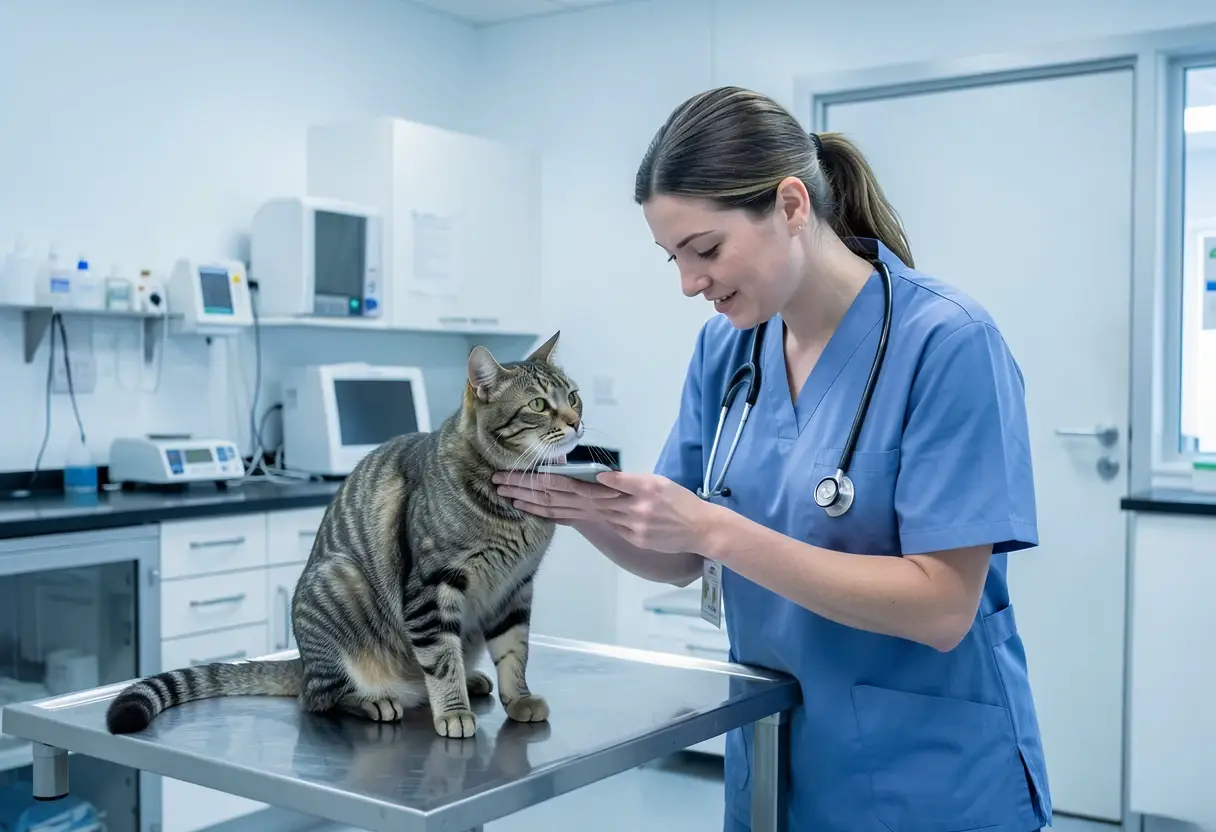
Photo: AI-generated
The updated American Animal Hospital Association (AAHA) feline diabetes guidelines, released this year, no longer recommend routine in-hospital glucose curves — the single most practice-visible change in a document that also expands drug options and reframes what counts as treatment success.
Kelly Cairns, DVM, MS, DACVIM (SAIM), who discussed the guidelines in a conversation with dvm360, places the shift in context: the discipline has moved from a single tool and hospital-based data to a broader toolkit and home-based monitoring. For practitioners, that changes both the first appointment with a newly diagnosed cat and the follow-up schedule for cats already on insulin.
Why did in-hospital glucose curves lose their routine role?
Cairns is direct about what the guideline change means. "One of the things that I think is super striking about the AAHA guidelines is that routine in-hospital glucose curves are no longer recommended," she said.
The reasoning is practical. A day in the hospital stresses the cat, and stress distorts glucose data. Decisions built on numbers gathered during a stressful hospital stay carry a built-in error term.
The guidelines do not dismiss glucose curves as unimportant. "That's not saying that glucose curves are unimportant," Cairns explained. "It's saying we should do it in a way that's going to produce more useful information in a less disruptive environment for the patient."
The replacement is the continuous glucose monitor. "Instead of trying to make decisions after a stressful day in the hospital, we're turning more to using continuous glucose monitors to look at trends while the cat is in its normal home environment," she said.
For the exam table, that means fewer drop-off days and more interpretation of trend data captured where the cat actually lives. Takeaway: the curve survives, but it moves home.
What do SGLT2 inhibitors add for newly diagnosed cats?
Insulin remains the cornerstone of feline diabetes treatment, and Cairns does not suggest otherwise. "Insulin has been the cornerstone or central treatment for feline diabetes for a really long time, and while insulin is still super important, we now have other medications," she said.
The new class she names is the sodium-glucose cotransporter-2 (SGLT2) inhibitors. These can serve as an alternative for a narrow population: "very carefully selected newly diagnosed cats that have never received insulin."
The selection language deserves attention at the exam table. This is not a blanket first-line substitute for insulin. It is an option for screened, insulin-naive, newly diagnosed patients that meet defined criteria — a distinction practitioners will need to apply case by case.
The broader pattern Cairns describes is not simply more drugs. "I think the biggest change is that we have a lot more tools now, and we're becoming more thoughtful about how we use them," she said. Takeaway: more options demand more deliberate patient selection, not reflexive prescribing.
How do the guidelines redefine success?
The third change is conceptual. The updated guidelines shift emphasis from glucose numbers toward clinical outcomes — how the cat is actually doing.
"An increased emphasis on clinical outcomes, really looking at if the cat is feeling better," Cairns said. "Is their thirst and urination normal? Is their weight stable? These are very meaningful measures of success, not just looking at the glucose numbers."
That reframing matters for owner communication. Owners can report water intake, litter box output and weight at home; they cannot read a curve. Aligning the definition of success with what owners can observe supports adherence and follow-up. Takeaway: a stable, comfortable cat with normal thirst and steady weight now defines success as clearly as any glucose reading.
What changes next for feline practice?
The 2025-updated AAHA guidelines consolidate a decade-long evolution Cairns has watched across her own practice years: from insulin-only protocols and hospital curves toward combination options, home-based continuous monitoring, and outcome measures that reflect the cat's lived condition.
Practices that build continuous glucose monitor interpretation into their workflows, and that apply strict selection criteria when considering SGLT2 inhibitors for insulin-naive cats, will be operating in line with the new document from the first visit onward.
Source: dvm360.com
Elena Vasquez
Show full bio
Market editor covering money, funding and market shifts around Small- and large-animal clinical practice at The Vet Scope.
Related articles
AAHA Splits Diabetes Guidelines Into Separate Canine and Feline Editions
FelineVMA Opens Free Resource Center on Feline Visit Stress
AVMA: Pet Owners Prioritize Veterinary Spending Despite Economic Pressures
Senior Pets Are Falling Out of Veterinary Care. A Structured Pathway Pulls Them Back
Purina Study: Lean-Fed Dogs Lived Nearly Two Years Longer