A veterinarian under fire in Vietnam pursued a rabies mission
Veterinarian Neill Johnson survived a 500-troop attack in 1970, then vaccinated military-base pets after a rabies death exposed a dangerous prevention gap.
Photo: mirkosajkov / pixabay
By Nathan Brooks
On May 3, 1970, roughly 500 Vietnamese troops forced their way onto Landing Zone Betty, a small U.S. helicopter gunship base in South Vietnam, firing more than 120 mortar rounds and countless rockets during a night attack.
Local Viet Cong rebels guided the attackers. Dr. Neill Johnson, a Pullman native and alumnus of Washington State University’s College of Veterinary Medicine and Honors College, spent more than an hour alone just inside an empty bunker, armed with only a .45-caliber pistol.
He had been in Vietnam for 11 days and had never visited the remote installation. The ambush left the small reserve force wiped out, and the attackers set every gunship ablaze. Johnson expected more assault troops to finish the survivors.
What stopped the attack at Landing Zone Betty?
Johnson said: “The idea was they were going to send in more assault troops and finish off the rest of us, but Puff the Magic Dragon arrived at the last minute.”
Puff the Magic Dragon was a Douglas AC-47 Spooky, a cargo-plane conversion carrying machine guns that could fire 6,000 rounds per minute. Every fifth round was a tracer bullet, whose orange-red line helped shooters readjust their aim.
Johnson compared the display to a giant water hose of pure color crossing the sky and said the enemy left immediately. That night marked the last time he went without a rifle at his side; he thereafter kept one beside him even while sleeping, despite never receiving proper rifle training.
What did military veterinarians handle?
Johnson earned his Doctor of Veterinary Medicine from WSU in 1969 and served as one of about 300 veterinarians during the Vietnam War. His duties covered food safety and procurement and the care of an estimated more than 5,000 military dogs that safeguarded American lives.
The dogs tracked, searched tunnels, detected mines, scouted and guarded. Johnson said the Army assigned him 20 percent of Vietnam to cover and kept him mostly on the road; he also ran a small-animal clinic at Cam Ranh Bay that treated pets.
How did rabies affect companion animals?
Companion animals: Rabies remained a constant concern because wild dogs wandered onto bases and through troop areas, and some showed signs of disease. Military veterinarians identified suspected cases and worked to limit exposure.
At a remote engineering base, a pet dog died and tested positive for rabies. No pet dog there had ever been vaccinated, leaving Johnson no choice but to euthanize every pet dog on the base.
Several soldiers picked up puppies beside convoy roads and came to regard them as their closest companions, even while disliking the Army, Vietnam and the war, Johnson recalled. He called the euthanasia one of his worst days.
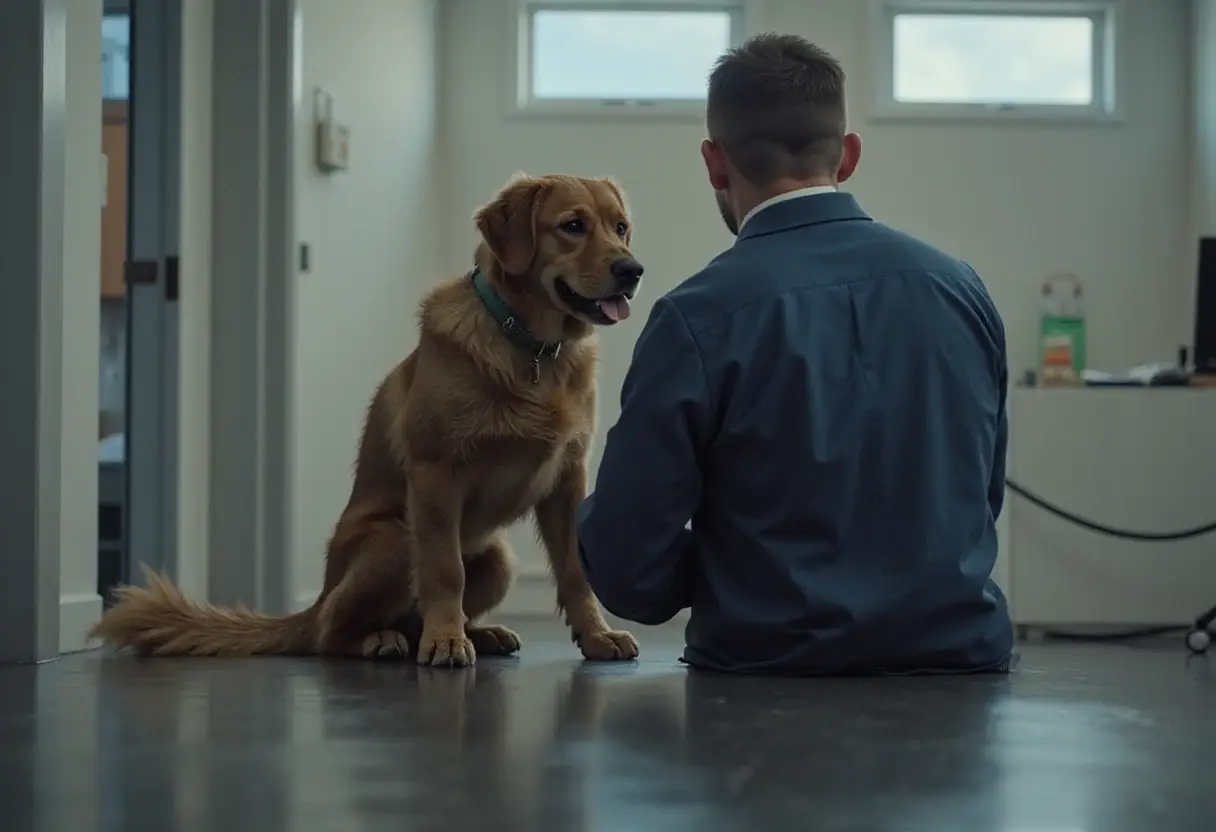
He then set out on his own mission: vaccinate every soldier’s canine companion at every far-flung base he could reach. Units received advance word that he would land in a helicopter gunship and should assemble with their dogs because, he said, a veterinarian was coming.
What public-health threats did he confront?
Public health: Johnson’s small-animal clinic at Cam Ranh Bay stood next to a preventive medicine unit that monitored the base for infectious disease, especially plague carried by rats and their fleas.
Workers trapped rats, collected all their blood, combed off the fleas and tested both for plague bacteria. They then disposed of large numbers of dead rats.
Johnson proposed buying a Burmese python to eat the carcasses. The purchased snake became one of his only exotic patients.
Food animals and the military food supply: Food safety and procurement anchored the other side of his military role. His account names no particular food species or products, but establishes responsibility for the food supply supporting deployed forces.
What other dangers closed in?
During another night attack, Johnson nearly entered an abandoned bunker containing a nest of venomous pit vipers. On a separate journey, his veterinary truck cleared a landmine by inches; the vehicle behind him did not, and all its occupants died.
He abandoned the sandy roads after that incident. Johnson recalled that the only veterinarian killed in Vietnam had struck a landmine and that he came close to becoming the second, No. 2, if his truck had moved a few inches farther.
What came after the war?
Johnson received an honorable discharge in April 1971 with a Bronze Star. While his wife, WSU Honors College alumna Dr. Julia Johnson (’71 Biology), now a veterinarian, completed veterinary school, he earned a PhD in veterinary science from the University of Wisconsin.
He later joined the University of Georgia faculty, worked in its diagnostic laboratory and became a board-certified veterinary pathologist before working for a variety of pharmaceutical companies. Decades later, he documented his wartime service in an online slideshow.
Why does Johnson still support WSU?
Johnson remains close to Pullman and WSU, where his family’s history reaches the university’s founding. He descends from Judge Thomas Neill, who helped bring the institution then known as Washington Agricultural College and School of Science to Pullman; WSU’s Neill Hall bears the judge’s name.
Johnson supports WSU and opportunities for aspiring veterinarians, particularly those interested in research. His own veterinary education nearly ended when mononucleosis persisted for two years and abated only halfway through his junior year.
He then earned the highest grade on a test about cattle diseases and knew he had recovered. Professors monitored his coursework, alerted him when work fell behind and helped him complete every requirement.
Johnson said: “My professors really cared about their students and helped us to achieve our goals. I will always be grateful to them.” He and his wife continue that support.
His online slideshow preserves the record for the public, while his support for WSU research gives aspiring veterinarians a concrete route to carry his commitment forward.
Source: vetmed.wsu.edu
Nathan Brooks
Show full bio
Senior reporter covering companies, deals and strategy in Small- and large-animal clinical practice at The Vet Scope.
Related articles
WHO Runs Exercise CARAVAN for Central Asia Zoonotic Readiness
Uganda's NDA tightens border controls after Shs100m vaccine seizure
Viet Nam Veterinary Lab Scores Climb 23.5 to 61.7 in FAO Mapping
Vietnam's Draft Food Safety Law Imposes Residue Limits at Slaughter
Vietnam broiler antimicrobial use tracked across full production cycles