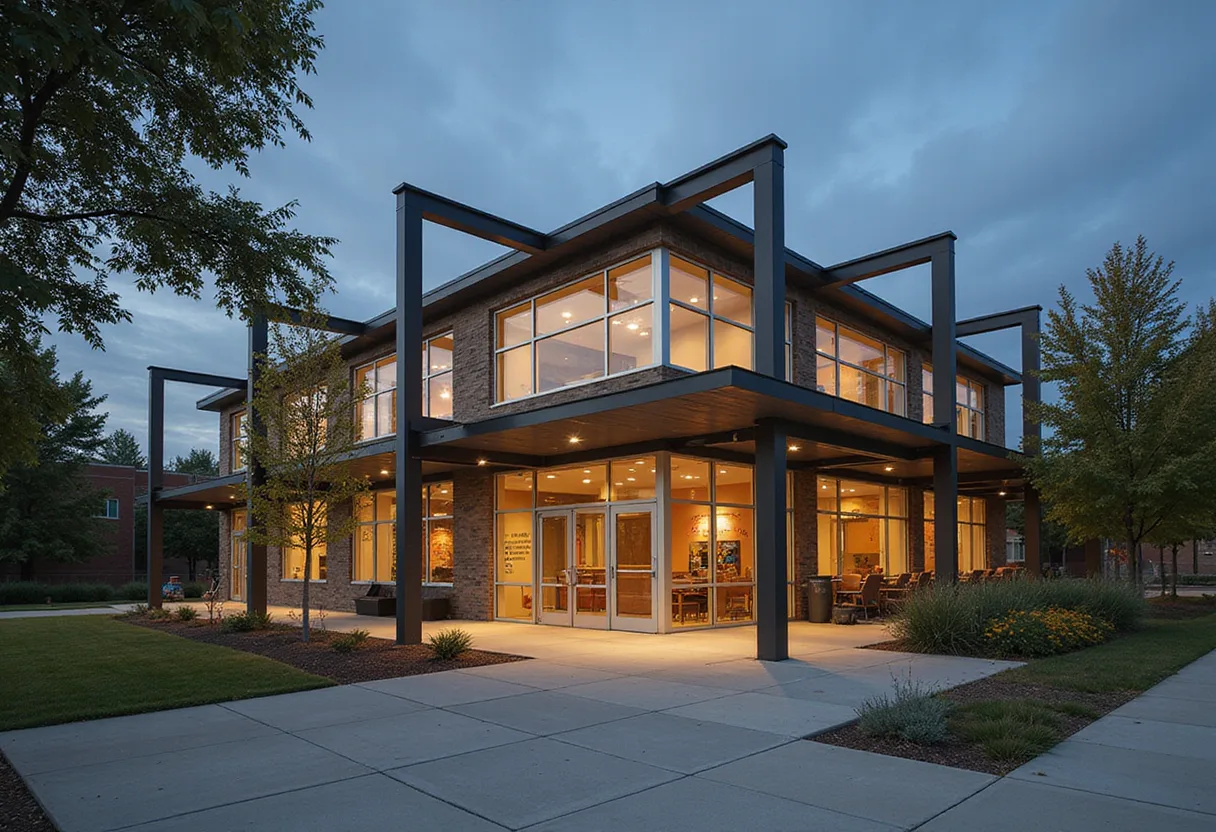
Midwestern University Realigns Plans for Chicago Veterinary College
Midwestern University has announced a strategic realignment of its proposed Chicago College of Veterinary Medicine, changing the path of the project without confirming a cancellation.
Updated
Midwestern University has announced a strategic realignment of its proposed Chicago College of Veterinary Medicine, confirming that the project will not proceed along its previously outlined path.
The announcement, carried by the university under the title "Strategic Realignment of Proposed Chicago College of Veterinary Medicine," signals a change of direction for an institution that had positioned itself to add veterinary capacity in one of the country's largest metropolitan markets. The university has not, in the material released, detailed the specific terms of the realignment or a revised timeline.
What does the announcement actually say?
The confirmed facts are narrow. Midwestern University, which operates its main health-sciences campus in Downers Grove, Illinois, had proposed a College of Veterinary Medicine serving the Chicago area. The university now describes that proposal as undergoing strategic realignment.
That wording matters. A realignment is not, on its face, a cancellation. It indicates the university is restructuring how, when, or in what form the college moves forward. Practitioners, applicants, and admissions advisors should treat the project's status as changed rather than closed, pending further detail from the institution.
The university has not stated what the realignment means for:
- The proposed opening date of the college
- Any accreditation steps already taken or planned
- Projected class sizes or admissions cycles
- Faculty hiring or facility construction already underway
Why the Chicago proposal drew attention in the first place
Any new veterinary college in a major metropolitan market carries weight for the profession. Illinois currently has one veterinary college, the University of Illinois College of Veterinary Medicine in Urbana. A Chicago-area program would have placed veterinary education inside a dense referral-hospital corridor, close to the specialty practices, zoological institutions, and public-health agencies that concentrate in the region.
For practitioners, a new college in that market would have meant several concrete things over time: additional graduates entering the regional workforce, potential relief for clinics that struggle to hire, and expanded clinical rotation sites for students. A realignment delays all of that certainty.
The shortage of veterinarians and veterinary technicians remains a persistent constraint on practice operations nationwide. Any slowdown in the pipeline of new graduates, even at the proposal stage, extends the timeline for relief.
What does this change for the profession?
In the immediate term, very little changes at the exam table. No college means no current students, no current applicants, and no graduating class whose plans are disrupted. The practical impact falls on a narrower group.
Prospective students who had watched the Chicago proposal as a potential application target should recalibrate. Advisors at pre-veterinary programs in the Midwest will need to track the university's next announcements closely. Existing veterinary colleges in the region, public and private, remain the available pathways for Illinois applicants.
For Midwestern University itself, the realignment reframes an institutional investment. The university already operates health-professions programs across osteopathic medicine, pharmacy, dental medicine, and other disciplines, and veterinary medicine would have extended that portfolio. A strategic realignment suggests the institution is weighing timing, cost, or structure against its broader priorities.
The accreditation question
New veterinary colleges in the United States move through a defined pathway with the American Veterinary Medical Association's Council on Education (COE), the accreditor recognized by the US Department of Education for veterinary medicine. That process includes a detailed feasibility analysis, site visits, and staged approvals before a program can admit its first class.
The university's announcement does not state where the proposed college stood in that process, or how the realignment affects any status already granted. That question will shape how quickly the project could resume under a revised plan. A program early in the accreditation pathway has more flexibility to restructure than one with an established timeline and hired faculty.
What to watch next
The credible next signals will come from the university directly. A revised timeline, a named dean, an updated accreditation filing, or a capital announcement would each indicate whether the project is being restructured toward launch or shelved.
Until Midwestern University releases those details, the practical reading for the profession is straightforward: Chicago's proposed veterinary college remains an open question rather than a closed door, and the regional workforce pipeline stays on its current footing.
Source: Google News: Veterinary medicine
Elena Vasquez
Show full bio
Market editor covering money, funding and market shifts around Small- and large-animal clinical practice at The Vet Scope.
Related articles
Oklahoma State University Names New Dean of Veterinary College
U of A College of Veterinary Medicine granted full accreditation
Purdue Veterinary College Expansion Targets Workforce Pipeline
WSU Veterinary Medicine Dean Dori Borjesson Announces Retirement
Maryland HBCU advances toward state's first veterinary school