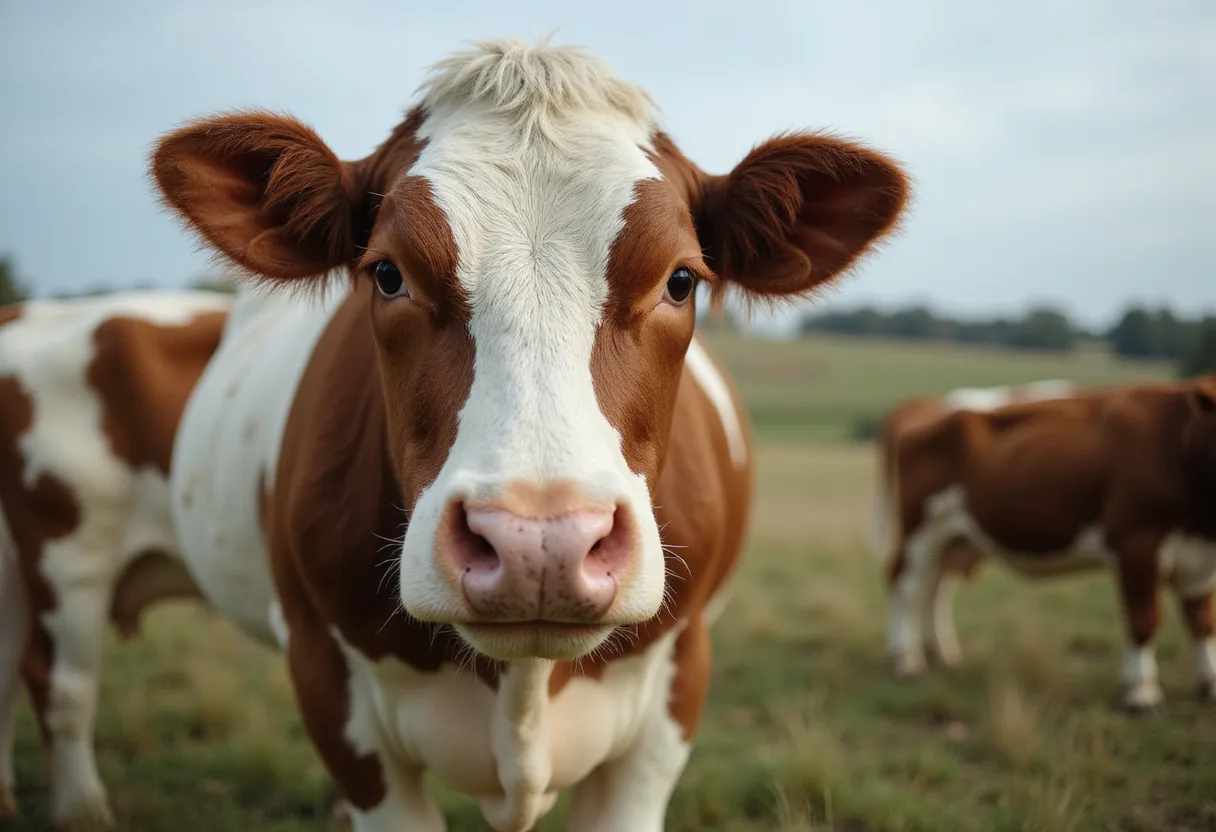
Journal of Dairy Science maps somatic cell count patterns on US organic dairies
A ten-author Journal of Dairy Science study, published October 9, 2026, analyzes cow- and herd-level somatic cell count patterns on US organic dairy farms.
Updated
A study published online October 9, 2026, in the Journal of Dairy Science examines the factors associated with cow- and herd-level somatic cell count patterns on organic dairy farms in the United States. The paper carries a ten-author team spanning several major dairy-science institutions: C. Hernández-Gotelli, A. De Vries, E.K. Miller-Cushon, B.J. Heins, R.A. Lynch, Q.K. Kolar, G.M. Schuenemann, V.E. Cabrera, E. Silva, and P.J. Pinedo.
Somatic cell count remains the standard milk-quality indicator that processors, cooperatives, and regulators watch on every load of milk. For organic producers, the count carries extra weight. Antibiotic use is restricted under organic standards, so a high-SCC cow often cannot follow the conventional route of treatment and return to the tank. Management, not medicine, does more of the work. That is precisely why the authors targeted organic operations rather than the industry at large.
What does the study actually address?
The title frames two distinct levels of analysis, and the difference matters for practitioners.
- Cow-level patterns: which individual animals — by stage of lactation, parity, or infection history — drive elevated counts within a herd.
- Herd-level patterns: which farm-level conditions — housing, milking routine, environment, record-keeping — separate consistently low-SCC organic herds from volatile ones.
Splitting the two is not academic hair-splitting. A herd problem and a cow problem call for different interventions. Treating a herd-level hygiene failure with cow-level culling decisions wastes money. Conversely, ignoring a handful of chronic high-SCC cows lets a herd average drift upward even when facilities and routine are sound.
Why organic farms specifically?
Organic dairies operate under a distinct rulebook. The USDA National Organic Program prohibits routine antibiotic use, and treated cows must leave organic production. That constraint changes the economics of mastitis and subclinical infection — the primary drivers of elevated somatic cell counts.
Because of that restriction, the conventional playbook — detect, treat, return — collapses. Prevention, early detection, and dry-period management carry most of the load. A study that quantifies which factors actually associate with SCC patterns in this population gives organic producers and their veterinarians a decision framework built on their own operating conditions, not extrapolated from conventional systems.
The multi-institutional author list signals a broad data effort. Names like De Vries (University of Florida), Heins (University of Minnesota), Miller-Cushon (University of Florida), Cabrera (University of Wisconsin-Madison), Schuenemann (formerly Ohio State), and Pinedo reflect dairy-extension and epidemiology groups that routinely work with large multi-farm datasets. Silva and Hernández-Gotelli add epidemiological depth. Readers should watch the full text for the sample size, herd distribution across states, and the statistical models used — the abstract available with the October 9 online release carries those specifics.
What changes at the exam table or in the barn?
For bovine practitioners serving organic clients, the practical value of this work sits in three places.
- Prioritization. If the study confirms which cow-level factors — say, parity or stage of lactation — most strongly predict high-SCC patterns in organic herds, veterinarians can target monitoring where it pays.
- Hrd audits. Herd-level associations give consultants a checklist grounded in organic data rather than conventional-farm inference.
- Benchmarking. Producers can compare their own SCC pattern — flat, seasonal, or spiking — against the typology the authors describe.
None of these translate into a drug, a vaccine, or a regulatory shift. This is an epidemiology paper. Its output is decision support, not a product.
How does this fit the wider milk-quality picture?
The Journal of Dairy Science publishes a steady stream of SCC research, but organic-specific, pattern-level analysis is thinner on the ground. Most existing work aggregates conventional herds, where treatment options differ fundamentally. A dedicated organic dataset narrows that gap.
The study also lands at a moment when organic dairy continues to expand in the United States, and processors tighten quality premiums. Somatic cell count directly affects farm payment. A herd that holds counts low captures premiums; a herd with volatile counts forfeits them.
What should readers watch next?
The October 9, 2026, online availability means the full text, including sample size, study design, and modeled associations, is now accessible through the Journal of Dairy Science. Practitioners who want the numbers behind the conclusions — which factors rose to statistical significance, and how strong those associations ran — should read the complete paper. Follow-up work from this author group will likely test whether the identified factors hold across regions and seasons.
Source: Journal of Dairy Science (Elsevier)
Grace Kim
Show full bio
Staff writer covering regulation, policy and their impact on Small- and large-animal clinical practice at The Vet Scope.
Related articles
Journal of Dairy Science Maps Raw Milk Quality From Farm To Processor
New invited review reframes herd-level udder health indices
Bavarian Calf Study Maps Antimicrobial Use, Weight Gain and Mortality
Dairy Farmers Turn to Nutrition Tools for Efficiency and Health Gains
Parity linked to mastitis, lameness and reproduction in dairy study