Fire Salamanders Glow Under UV Light, Toxic Skin Secretions Fluoresce for Over 24 Hours
Fire salamanders fluoresce green and cyan under UV light, and their toxic skin secretions glow for over 24 hours, according to a new Max Planck-led study in Royal Society Open Science.
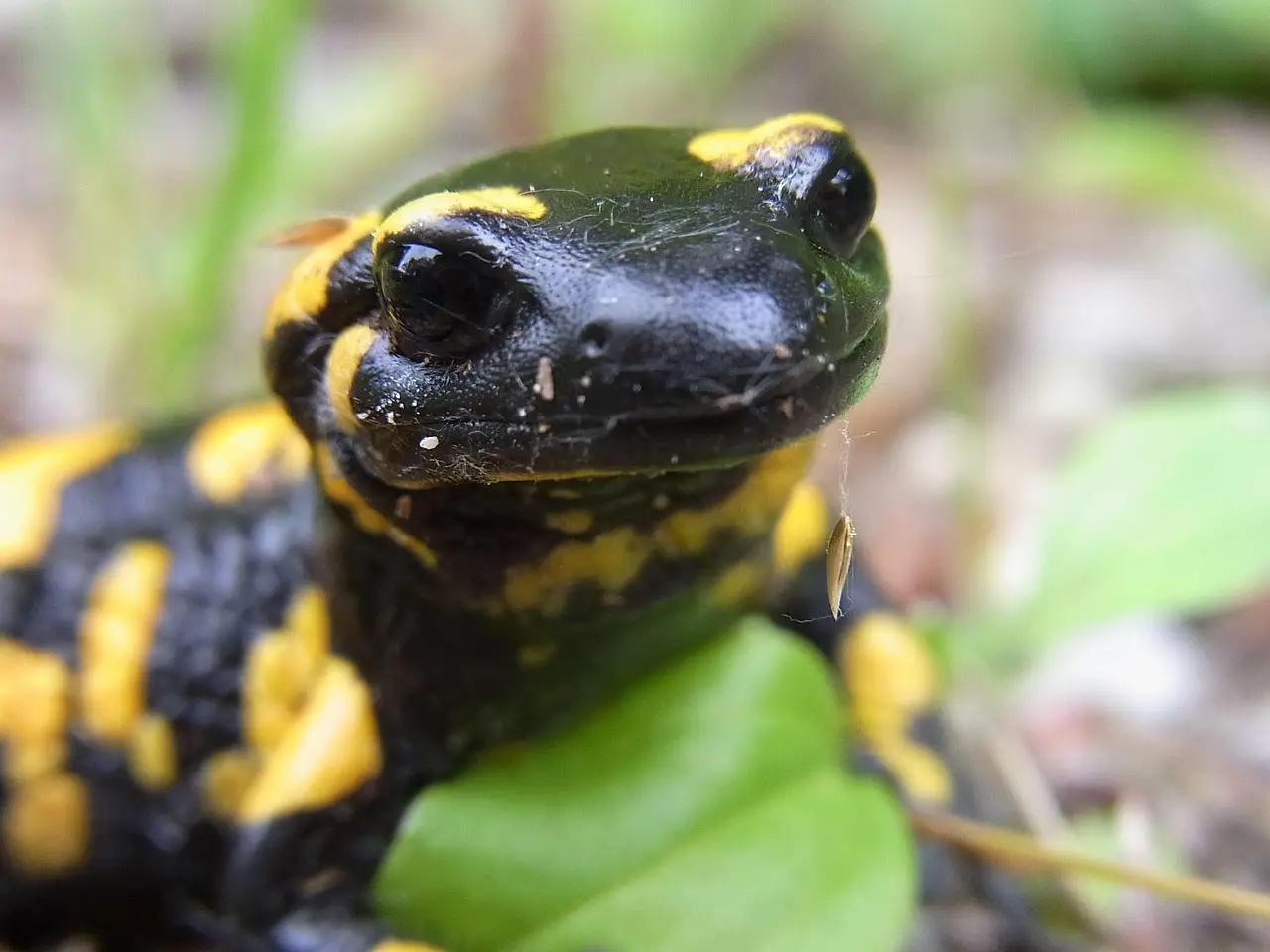
Photo: 7854 / pixabay
Fire salamanders (Salamandra salamandra) fluoresce green and cyan under ultraviolet light, and their toxic skin secretions keep glowing for more than 24 hours after leaving the animal's body. That is the central finding of a study published in Royal Society Open Science (2026, vol. 13, issue 5; DOI: 10.1098/rsos.251991) by a team led by the Max Planck Institute for Chemical Ecology.
The glow is strongest on the yellow underside of the animals and along their flanks. Researchers traced the fluorescence primarily to glands in the skin and to the substances those glands release. The effect persisted in secretions for over a full day after release, which means any chemical signal left on a substrate could outlast the animal's presence.
The study's first author, Bernat Burriel-Carranza of the Museum of Natural Sciences in Barcelona, said: "It is fascinating that such a well-studied species still harbors unknown phenomena like this. It reminds us that even the most familiar organisms can hide secrets that are only revealed when they are observed with new tools."
How the fluorescence works
Biofluorescence occurs when compounds in the skin absorb ultraviolet light, which humans cannot see, and reemit that energy as visible light. In fire salamanders the process produces vivid green and cyan colors. It requires an outside light source and differs from bioluminescence, where animals such as fireflies generate light through their own chemical reactions.
Scientists once assumed biofluorescence occurred almost exclusively in marine organisms, with scorpions as the notable land exception. Recent work has overturned that view, documenting fluorescent properties in reptiles, birds and amphibians. The new paper adds one of Europe's most recognizable amphibians to the list.
What does the glow do?
The biological function remains unconfirmed. Two hypotheses dominate.
The first is communication. Fluorescence could help salamanders detect one another in nocturnal or dense forest environments, or act as an additional defense signal. Co-author Martin Kaltenpoth, director of the Department of Insect Symbiosis at the Max Planck Institute for Chemical Ecology, said: "Fluorescence meets several criteria that suggest a communicative function. It could help salamanders detect each other in nocturnal or particularly dense environments, or act as an additional defense signal."
The ecological setting supports this idea. In fire salamander habitat, night illumination comes mainly from moonlight and starlight, and full moonlight contains a higher proportion of ultraviolet and violet wavelengths than daylight, which has a more evenly distributed spectrum. Under those conditions, fluorescence could create small green and cyan highlights against the yellow markings, potentially making individuals easier for other salamanders to spot. Animals with sensitive vision may detect the glow even when faint; humans need a UV lamp.
The second hypothesis is aposematism — conspicuous coloration that advertises toxicity to predators. Fire salamanders already use their black-and-yellow pattern as a warning signal, and fluorescence might add a visual cue. Scientists linked salamander warning colors to chemical defenses more than a century ago, when they identified samandarines, highly toxic steroidal alkaloids produced from cholesterol precursors. The discovery that the toxic secretions themselves fluoresce raises new questions about how salamanders interact with predators and other animals in their environment.
What is the chemical behind the glow?
The compound responsible has not been identified. Evidence suggests it may be a molecule never before documented in this species.
Co-first author Andrés E. Brunetti of the Max Planck Institute said: "The presence of this fluorescent compound was surprising because salamander skin secretions have been studied chemically for decades, and we were unaware of any published reports on fluorescence."
Co-author Salvador Carranza of the IBE (CSIC-UPF) added: "We still don't know what the compound responsible for this fluorescence is, but everything indicates that it is a molecule unknown until now in this species. Identifying it will be key to understanding its origin and function." The team is now working to identify and chemically characterize candidate compounds.
Why the finding matters for conservation
The IUCN lists the fire salamander as "vulnerable" on its Red List of Threatened Species. The animals inhabit damp forests, streams and mountainous regions, where habitat destruction and fragmentation increasingly threaten survival.
Determining whether fluorescence affects communication, mating or predator avoidance could sharpen the understanding of the species' behavior and ecological needs. The study also demonstrates how new observation techniques can reveal biological traits that have escaped detection for decades in otherwise thoroughly studied animals.
The research included scientists from the Institute of Subtropical Biology and the Catalan Society of Herpetology, and forms part of an amphibian conservation project in Catalonia supported by the Barcelona Zoo Foundation. Identification of the fluorescent compound is the next step, and it will determine whether the glow is signal, defense or both.
Original: iucnredlist.org
Daniel Okafor
Show full bio
News editor covering technology and product news in Small- and large-animal clinical practice at The Vet Scope.
Related articles
Livestock Care After Wildfires: What Experts Advogue Practitioners
Thirteen Fatty Acids Form a Stable Identity Code in Cat Urine, Study Finds
Study to Address Green Discoloration in Vacuum-Packed Goose Liver
Wildfires Raise Concerns for Animal Health and Welfare
Two East Idaho reservoirs carry toxic bacteria, health officials warn