Donor category tied to amino acid profiles in bovine IVP embryos
A Journal of Dairy Science paper available online October 9, 2026, by seven authors with Polish and Lithuanian affiliations asks whether donor category shifts amino acid profiles in bovine oocytes and embryos produced in vitro.
Updated
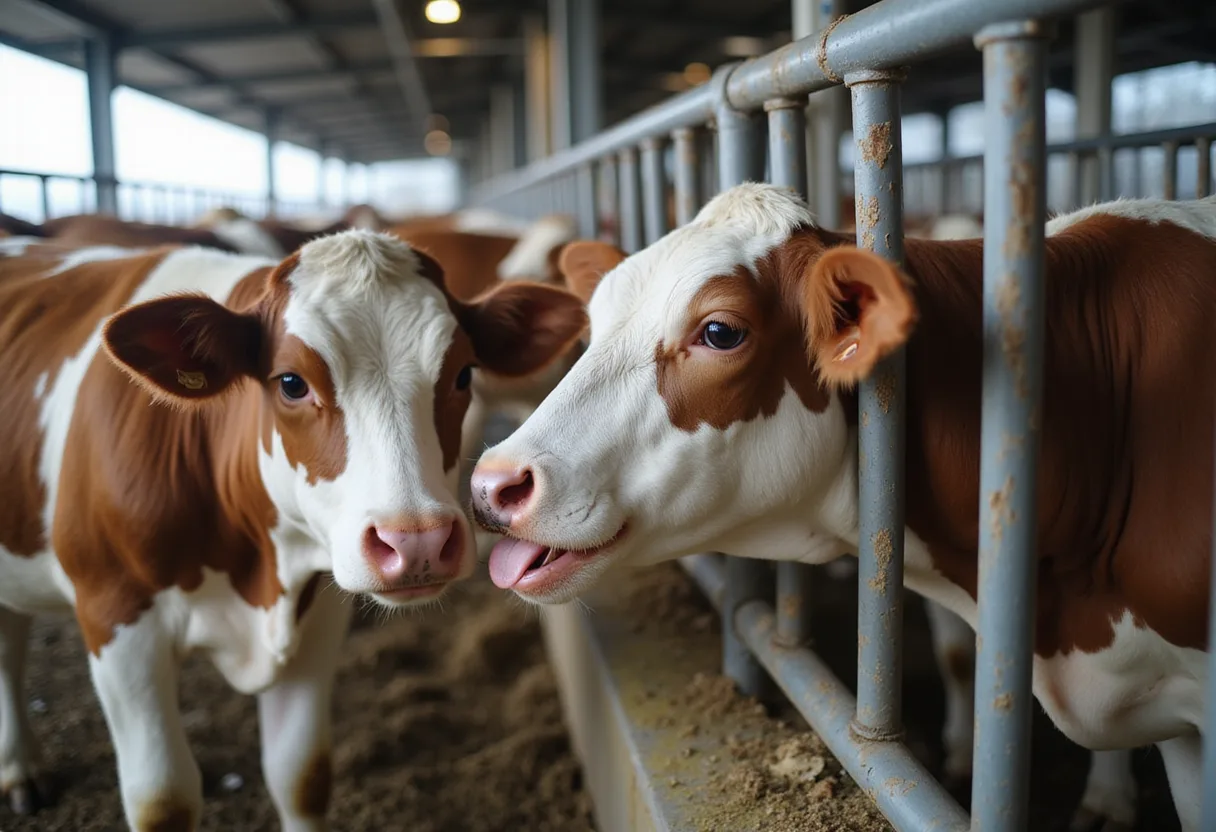
Photo: AI-generated
A Journal of Dairy Science paper available online October 9, 2026, by seven authors whose surnames point to Polish and Lithuanian institutions asks whether the category of donor animal used in in vitro embryo production (IVP) shifts the amino acid profiles of bovine oocytes and embryos.
The paper, "Association between donor animal category and amino acid profiles in bovine oocytes and embryos produced in vitro," carries the authorship line of Dorota Boruszewska, Ernestas Mockus, Ilona Kowalczyk-Zięba, Agnieszka Jończyk, Sandra Gąsiorowska, Izabela Wocławek-Potocka, and Elena Bartkiene.
What did the study ask?
The authors compared amino acid concentrations in oocytes and embryos from donors grouped by category. The title does not specify how "category" was defined — lactation status, age, breed, or production metric.
The publication notice reviewed here does not state sample size, the specific amino acids measured, or the magnitude of any differences. Those figures sit in the full text behind the JDS paywall. Any practice-level read of the paper depends on which donors the authors actually compared and how many embryos per group made it into the analysis.
Why does amino acid profiling matter in IVP?
Amino acids in follicular fluid and in embryo culture media track closely with oocyte competence and early embryo development. They serve as osmolytes, energy substrates, and signaling molecules.
Shifts in their balance have been linked to differences in cleavage rates, blastocyst formation, and post-implantation viability in cattle. If donor category is a real driver of that profile, the IVP industry has a candidate quality-control variable sitting on the donor side of the aspiration line.
The October 9 paper is built to test that candidate.
Who wrote it?
The author list crosses two countries. Boruszewska, Kowalczyk-Zięba, Jończyk, Gąsiorowska, and Wocławek-Potocka carry Polish naming patterns; Mockus and Bartkiene point to Lithuanian institutions.
The mix fits a cross-border collaboration on bovine reproduction and food science, and JDS is the journal where such a paper would land for the dairy-research readership it is most likely to reach.
What the paper does not yet tell practitioners
The publication notice does not report:
- Sample size per donor category
- Which amino acids differed, and by how much
- Whether differences persisted to the blastocyst stage
- Whether embryos went on to produce pregnancies or live calves
Those are the four figures a reproductive veterinarian or a dairy manager would ask for first. Until the full text is in hand, the headline is the question itself: donor category may shape embryo amino acid environment, and the dairy-science community now has a peer-reviewed entry point for that conversation.
What changes at the exam table or in the barn?
For practices running or sourcing IVP embryos, the practical question is whether donor selection criteria that today rest on pedigree, milk yield, and reproductive history should be cross-examined against embryo metabolic data.
The October 9 paper is unlikely to settle that — an amino acid profile is a proxy, not a phenotype — but it puts the question in a journal producers and reproductive specialists already read. As commercial IVP throughput rises on dairy operations, donor-side selection is likely to be re-examined through a metabolic lens, and the Journal of Dairy Science now has a peer-reviewed entry point for that conversation.
Source: Journal of Dairy Science (Elsevier)
Amara Osei
Show full bio
Correspondent covering companies, deals and strategy in Small- and large-animal clinical practice at The Vet Scope.
Related articles
Study identifies 2 sire-fertility mutations in Jersey cattle
Japanese Holstein bull study maps inbreeding's hit on semen traits
Frontiers Editorial Maps Advances in Livestock Genetics and Breeding
Dairy study examines gene-by-feed interactions for milk yield
Journal of Dairy Study Examines Follicular Dynamics and AI Fertility