Cupplant flavonoids shift broiler cecal microbiome, study finds
A December 2026 Poultry Science study by Makatjane and colleagues links cupplant flavonoid supplementation to shifts in cecal microbial diversity and community structure in broiler chickens.
Updated
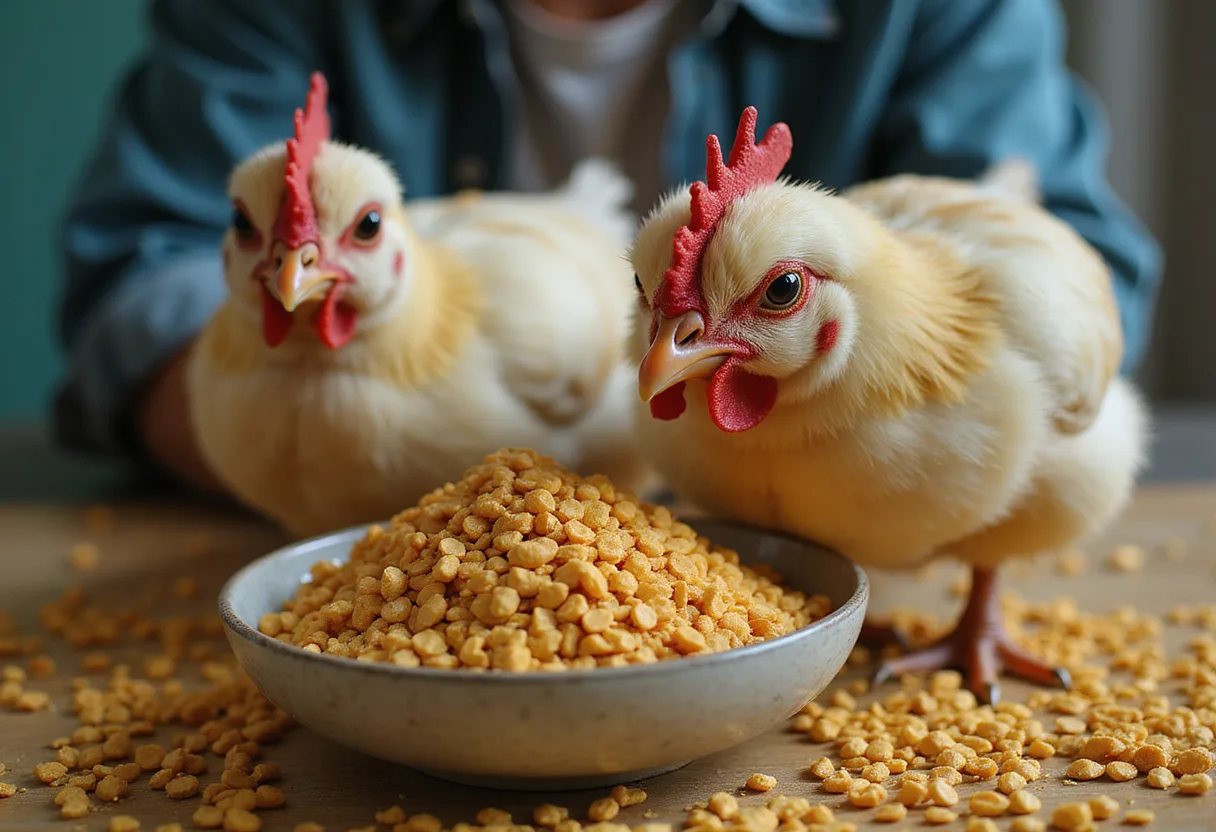
A December 2026 paper in Poultry Science links dietary flavonoids extracted from cupplant (Silphium perfoliatum L.) to measurable shifts in the cecal microbiome of broiler chickens. The study appears in Volume 105, Issue 12, the flagship publication of the Poultry Science Association.
The work carries 10 authors: Kabelo Anthony Makatjane, Jiayin Xu, Wei Guo, Guanglong Liu, Yuhan Wang, Hongzhi Lin, Zhang Fang, Tengyuqi Li, and Haizhu Zhou. The team titled their paper "Dietary Cupplant (Silphium perfoliatum L.) flavonoid supplementation is associated with changes in cecal microbial diversity and community structure in broiler chickens."
The authors frame the link as an "association," the standard phrasing in feeding-trial research where the goal is to map a response rather than to assign causation.
What did the researchers add to the feed?
The intervention is cupplant flavonoid supplementation. Cupplant, a perennial in the Asteraceae family, has drawn recent attention as a source of bioactive flavonoids for animal nutrition. Flavonoids are plant secondary metabolites with documented antimicrobial, anti-inflammatory, and antioxidant activity in laboratory studies. In the Makatjane et al. paper, the compound enters the ration as a feed additive rather than a therapeutic drug, placing it in the phytogenic-feed-additive category that has grown steadily since in-feed antibiotic growth promoters came under regulatory restriction in major export markets.
Why does the cecum matter?
The ceca are two blind pouches at the junction of the small and large intestine in the chicken. They hold the densest microbial populations in the bird's gut and drive fermentation of feed components the small intestine cannot digest. Cecal bacteria influence:
- Feed conversion ratio, the kilograms of feed needed per kilogram of weight gain
- Resilience against enteric pathogens such as Clostridium perfringens and Salmonella enterica
- Nitrogen recycling and ammonia output in litter
- Gut barrier integrity and villus development in adjacent small intestine segments
A measurable shift in cecal diversity can move several of these metrics at once, which is why gut-modulator feed additives have become a high-priority research line for commercial poultry operations.
What does this mean at the barn level?
Broiler margins remain thin. Feed accounts for roughly 60–70% of live production cost across major producing regions, so any additive that influences the gut's digestive machinery carries direct economic interest. Plant-derived flavonoid sources that shift microbial balance also fit the industry's directional pressure to reduce in-feed antibiotic use, a trend reinforced by the U.S. Food and Drug Administration's Veterinary Feed Directive and parallel restrictions in the European Union on antibiotic growth promoters.
For producers evaluating cupplant flavonoids, the practical questions are: at what inclusion rate, for what feeding duration, and at what cost per ton of finished feed. The available citation does not list any of those numbers.
What the citation does not yet show
The bibliographic record in Poultry Science Volume 105, Issue 12 does not include the cupplant flavonoid dose, the number of birds per treatment group, the length of the feeding trial, the 16S rRNA or metagenomic sequencing platform used, the specific bacterial taxa that shifted, or the statistical effect size. Producers, nutritionists, and veterinarians will need the full December 2026 issue text to weigh the practical effect on commercial flocks.
Looking ahead
The Makatjane et al. paper adds cupplant flavonoids to a growing catalogue of phytogenic feed additives under evaluation for gut-health effects in broilers. The next round of trials will need to show whether cecal microbial diversity changes translate into measurable feed conversion or mortality gains — the two figures that decide whether a feed additive scales from the research pen to a commercial integration.
Source: Poultry Science (Elsevier)
Amara Osei
Show full bio
Correspondent covering companies, deals and strategy in Small- and large-animal clinical practice at The Vet Scope.
Related articles
Poultry Science Study Tests Lupin and Faba Bean in Broiler Starter Diets
Poultry Science review maps biotech routes for palm kernel meal feed
Poultry Science study maps diet levers for 22-35 day broiler performance
Probiotic Strain Cuts Salmonella in Broilers, Poultry Science Study Finds
Puerarin improved meat quality in chickens via gut-muscle axis, December 2026 Poultry Science study finds