Caustic Paste Disbudding Study Targets Contact Time in Dairy Calves
A Journal of Dairy Science paper published online October 9, 2026, isolates contact time as the key variable shaping healing after caustic paste disbudding in dairy calves.
Updated
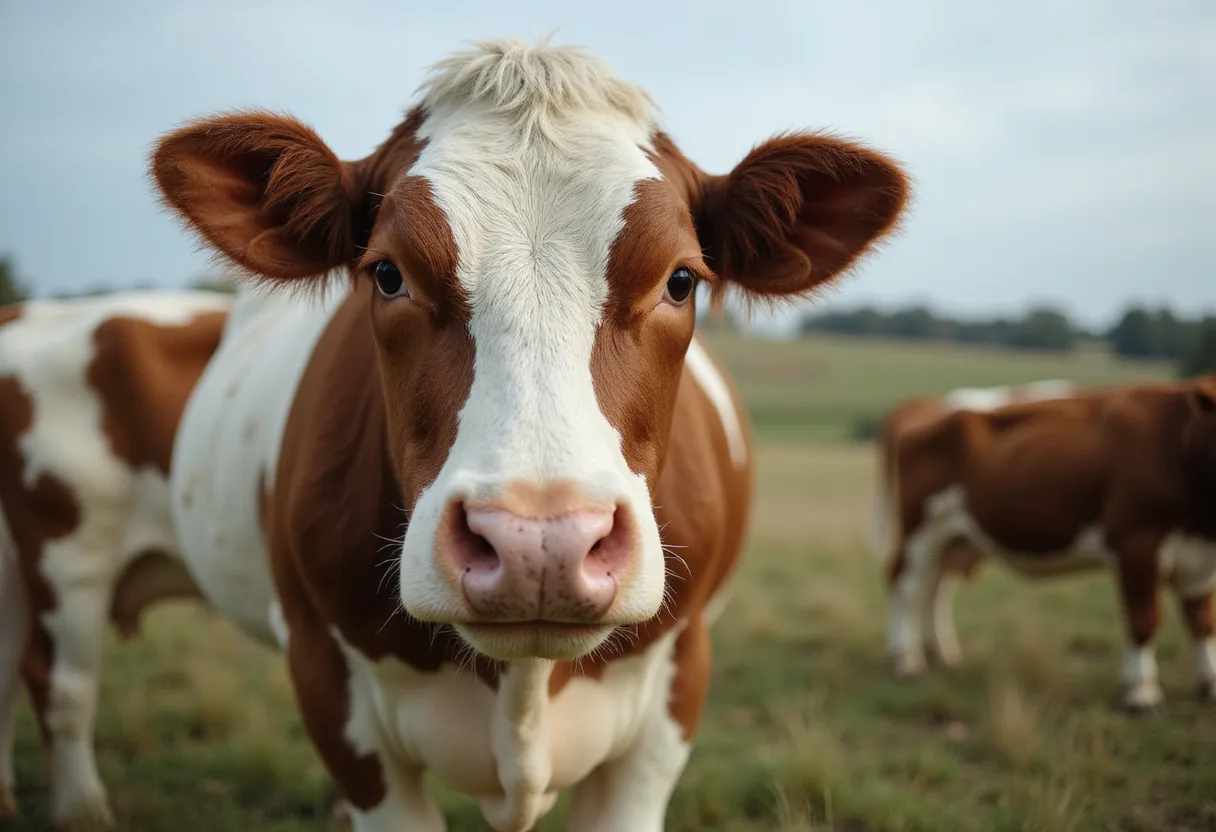
Photo: AI-generated
By Elena Vasquez
A new Journal of Dairy Science paper puts a timer on a routine dairy procedure. Published online October 9, 2026, the study examines how long caustic paste should remain on the horn bud of a dairy calf, with tissue healing as the primary outcome.
The paper carries the title "Disbudding dairy calves with caustic paste: Assessing the effect of contact duration on the healing process." Authors are Alycia M. Drwencke, Victoria S. Rodas, Sarah J.J. Adcock, and Cassandra B. Tucker. Four researchers, one narrow experimental question, one established welfare concern.
What did the researchers set up to test?
The title frames a structured comparison: caustic paste applied to the horn bud and left in contact for varying lengths, with healing as the dependent variable. That framing places a clock where most on-farm protocols leave duration implicit. Product labels list recommended windows. Producer practice varies. Clinical observation has long suggested shorter contact reduces the depth and breadth of chemical injury. The study now puts that observation under controlled comparison, with healing as the measured result rather than operator impression.
Why are producers watching?
Disbudding remains routine on most US dairy operations. The American Veterinary Medical Association classifies it as a painful procedure, recommends analgesia, and encourages intervention within the first weeks of life. Three methods dominate: cautery with a hot iron, application of caustic paste, and, less commonly, surgical removal. Each method carries trade-offs in pain, equipment cost, operator skill, and labor. A study that isolates contact time isolates a lever a producer can adjust without buying new equipment or retraining crew. Operations that already standardize paste removal timing may already be doing what the next decade of evidence is likely to formalize.
What changes at the chute?
Producers and veterinarians gain another reason to write down paste contact time, photograph the variable, and standardize it across staff. Operations already doing so are unlikely to change much. Operations currently leaving paste in place until visible scab formation are the audience the paper most directly addresses. Producers who shorten contact by even a few minutes, while protecting the surrounding skin from chemical spread, may reduce tissue loss without compromising horn-bud kill.
What does the field still need to see?
The publication metadata available to The Vet Scope lists title, authors, journal, and online date. Full text, sample size, treatment groups, and quantitative outcomes were not in the materials reviewed. Practitioners considering a protocol change should pull the paper, weigh its findings against AVMA guidance on disbudding and dehorning, and consult their regular veterinarian before adjusting paste dwell time. The work is positioned to inform practice. It is not positioned to replace existing analgesia recommendations. Local nerve blocks and nonsteroidal anti-inflammatory drugs still accompany every disbudding method in current welfare-oriented protocols.
Where do the implications sit?
This is a food-animal story. Dairy replacement heifers are the patients. On-farm welfare certification schemes, processor-supplier requirements, and retailer-driven audit standards are the downstream stakeholders. There is no meaningful companion-animal parallel. There is no zoonotic or food-safety dimension. The welfare touchpoint sits with the American Veterinary Medical Association, whose position statements on disbudding and dehorning continue to evolve as evidence accrues.
Bottom line
One contact-duration variable, four authors, one peer-reviewed venue. The work refines rather than rewrites disbudding practice. Producers who already time paste application carefully are doing what the next decade of evidence is likely to formalize. The next move sits with the readers and the practitioners who translate protocol into action at the chute.
Source: Journal of Dairy Science (Elsevier)
Elena Vasquez
Show full bio
Market editor covering money, funding and market shifts around Small- and large-animal clinical practice at The Vet Scope.
Related articles
Parity linked to mastitis, lameness and reproduction in dairy study
Milking-Time Metrics Linked to Milk Quality in Commercial Holsteins
New invited review reframes herd-level udder health indices
Large Animal Vet Shortage Adds New Burden for Cattle Producers
Frontiers study applies loss-envelope framework to dairy mastitis costs